
'Salary' is a word derived from salt — salt was used as a means of payment in the Roman Empire for many years. Later, during the Mercantilist Era, gold became the primary store of wealth. However, no formal theory of money existed at the time, and as a consequence, a...
OUR STUDY MATERIALS FOR YOU !
Check out our latest collection of supplementary books, guides, flashcards, practice questions for Economics, Statistics, Mathematics and many other academic subjects to ace your Cambridge, AP and Undergraduate Exams.
-
Economics Made Simple: A Supplementary Guide for AP and Cambridge A Level Students
$ 19 -
Economics Made Simple Practice Questions
$ 9 -
Printable Flashcards for Economics
$ 5 -
Economics Made Simple Free Chapters
$ 0 -
Sale!
Economics Case Studies: 100 Real-World Examples with Expert Analysis for Researchers, Teachers and Students
Original price was: $ 15.$ 9Current price is: $ 9. -
Sale!
Economics Made Simple Bundle Offer
Original price was: $ 42.$ 29Current price is: $ 29. -
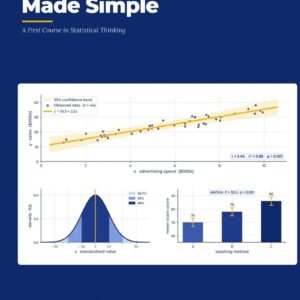
Statistics Made Simple Textbook — A First Course in Statistical Thinking for AP, A-Level, IB and Undergraduate
$ 12 -
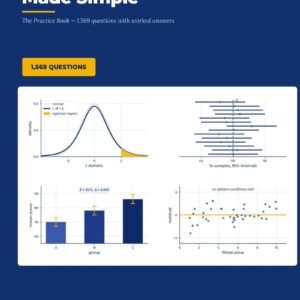
Statistics Made Simple Practice Questions — 1,569 Questions with Fully Worked Answers
$ 9 -
Sale!
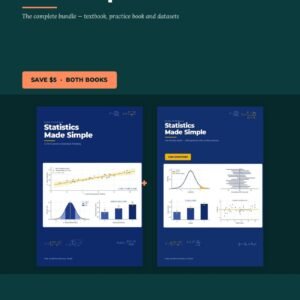
Statistics Made Simple Complete Bundle — Textbook + 1,569 Practice Questions
Original price was: $ 21.$ 16Current price is: $ 16.
Check Our Academic Content
Complete EconTutorials Content Library
Welcome to the EconTutorials Content LibraryEverything published on EconTutorials — in one place, organised by subject. Whether you're studying for AP Economics, Cambridge A-Level, IB, or undergraduate exams, use this page to find exactly what you need.🛒...
Introduction to Taxes and its Types
What comes in your mind when you hear or see the word “Tax” in your daily life discussions or on some news channel on T.V , newspapers etc ?. Have you ever thought how the Government gets financed and they pay salaries to employees ? Or pay pensions to retired...
Expected Value and Variance of Random Variables: Formula and Examples
A lottery ticket, an insurance policy, and a casino game all share the same underlying question: on average, across many repetitions, what should you expect to happen? The Statistics Made Simple Complete Bundle builds this idea up from first principles, with the same...
Outlier Detection: The IQR Method, Z-Scores and What to Do Next
A single data-entry typo — a salary of $5,000,000 instead of $50,000 — can single-handedly move a mean, inflate a standard deviation, and quietly wreck a regression model. The Statistics Made Simple Complete Bundle covers exactly how to catch outliers like this before...
How to Interpret a Confidence Interval (Without Getting It Wrong)
“95% confident” doesn’t mean a 95% chance the mean is inside your interval. The parameter is fixed; the interval is random, and the 95% describes the method. The net-and-fish analogy, why the width beats a p-value, the zero test, and the overlap mistake everyone makes.
Eviews Regression with Dummy variables
To understand regression analysis with dummy variables, let us take an example of using dummy variable with structural changes in an economy. For example, there was a structural change in U.S during 1981-1982, and also a severe recession in 2007 and 2008. So when we...
Dummy Variables
Study smarterDummy variables, interaction terms and the dummy-variable trap are covered alongside the rest of regression in the Statistics Made Simple Complete Bundle — textbook plus 1,569 worked practice questions, 18 datasets and R and Stata workshops.What are...
What is Regression Analysis ?
Study smarterRegression is built up from least squares to full inference in the Statistics Made Simple Complete Bundle — the 246-page textbook plus 1,569 practice questions with fully worked answers, 18 datasets and R and Stata workshops.What is Regression...
Recommendations
Economics Made Simple — The Complete Bundle
The Complete Bundle brings together everything we have built for AP and Cambridge A-Level Economics students: the full 914-page supplementary textbook, a 450-question practice workbook with mark schemes, a rapid-revision flashcard deck, and 100 real-world case studies with expert analysis. Four products, one price — designed to take you from first principles to exam-ready.
Most students use the textbook to understand the theory, the practice questions to test themselves under timed conditions, and the flashcards in the final week before the exam. The case studies sit alongside both — every concept grounded in something that actually happened, from carbon pricing in Sweden to the 2008 financial crisis. It is the study system we wish we had when we were students.

Be Apart of the Academic Community
Join the community of learner and receive free chapters, case studies and supplementary materials to ace in your exams.