
Economics, statistics, maths and econometrics — one clear step at a time.
Free step-by-step guides in syllabus order, with worked examples and practice questions. Pick your exam and start where you are.
Browse by subject
Every topic in syllabus order, with worked examples and practice questions.
Development economics
Why some countries grow and others stay poor, how inequality and human development are measured, and what war does to an economy. Every article uses real data with full references.
Step-by-step guides
Start at step 1 and work through. Plain language, worked examples and practice at every step.
- The economic problem
- The production possibility curve
- Comparative advantage
- Demand
- Gross domestic product
- Unemployment
- Inflation and price indices
- The business cycle
- Statistical thinking
- Data and how it’s collected
- Describing data with graphs
- Describing data with numbers
Choose your bundle
Pay once, download straight away, keep the PDFs forever.
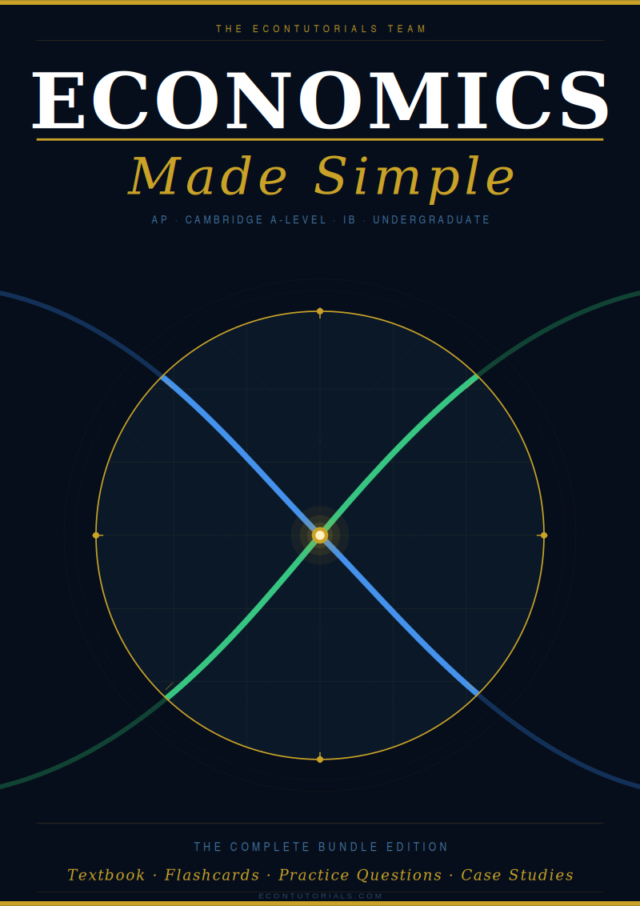
Economics bundle
- 914-page textbook, 30 chapters
- 450 practice questions and mark schemes
- 358 printable flashcards
- 100 real-world case studies
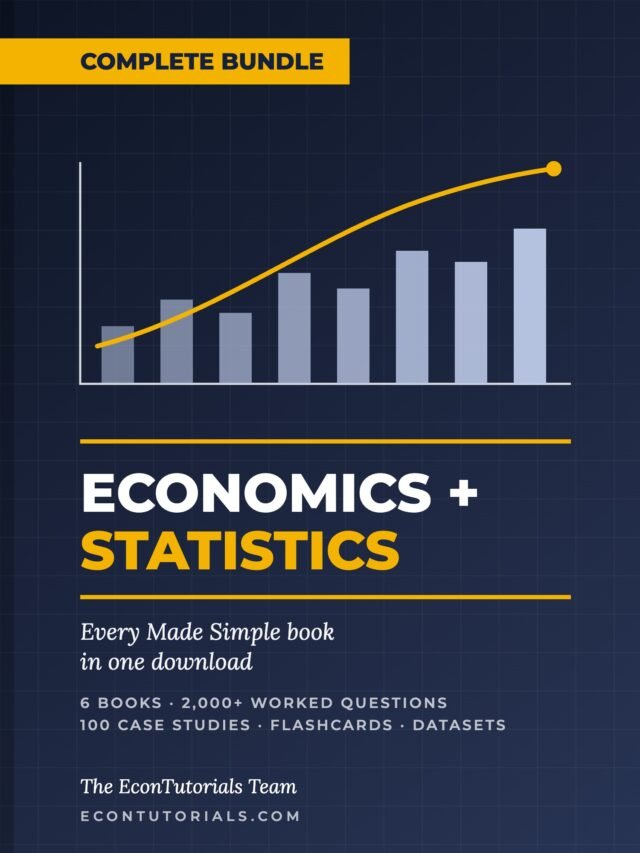
Complete bundle
- Everything in the Economics bundle
- Everything in the Statistics bundle
- Everything in the Mathematics bundle
- 8 books, 3,500+ worked questions
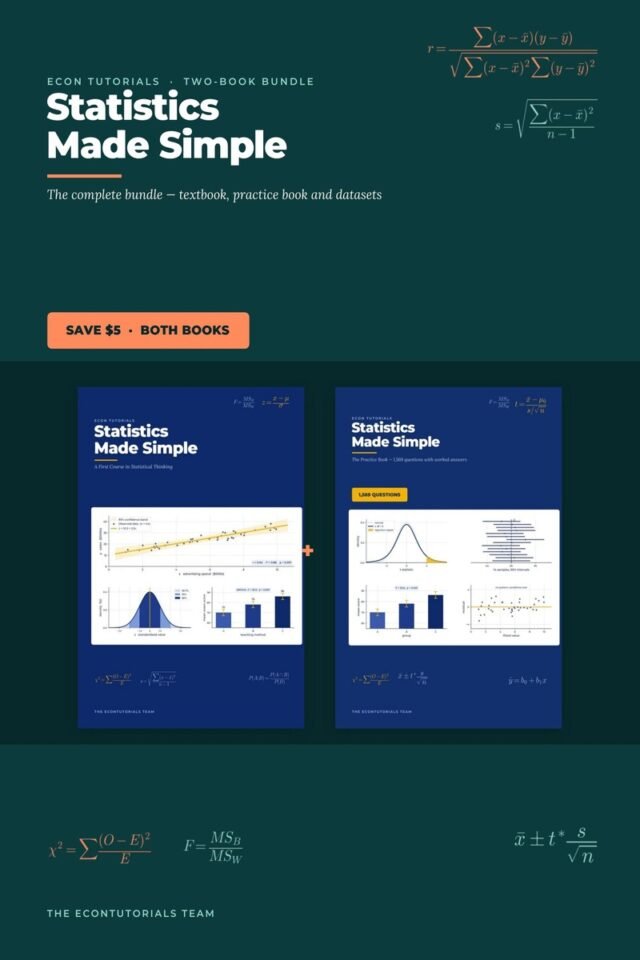
Statistics bundle
- 246-page textbook, 16 chapters
- 1,569 practice questions, fully worked
- Excel, R and Stata workshops
- 80-mark mock paper and 18 datasets
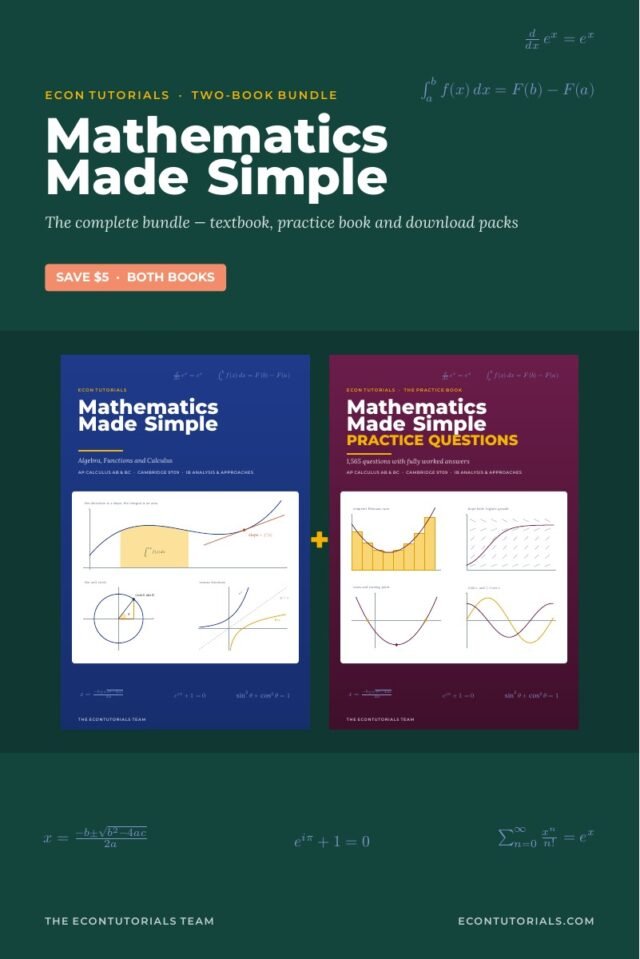
Mathematics bundle
- 539-page textbook, 20 chapters
- 1,565 practice questions, fully worked
- AP Calculus, Cambridge 9709 and IB AA
- Two mock papers and a formula sheet
Case studies: economics in the real world
Examiners reward real examples. 100 cases, each with a data table, the economics explained, a worked calculation and an exam-style question.
What does war do to an economy?
Output collapses, prices soar, debt piles up and people leave. Then, sometimes, a remarkable recovery. Twenty case studies, told with real data from the IMF, the World Bank and the UN.
- 20case studies
- 430pages
- 100+charts
- 750+sources cited
Most-read guides
- Z-Scores and the Normal Distribution: A Plain-English GuideStatistics
- The Phillips Curve: Inflation, Unemployment, and the Expectations TrapMacroeconomics
- Paired vs Independent t-test: How to Tell Them ApartStatistics
- Fiscal Policy: Government Spending, Taxation, Multipliers and the Debt DebateMacroeconomics
- Heteroskedasticity: What It Is, Why It Matters, and How to Fix ItEconometrics
- Profit Maximisation with Calculus: First and Second Order ConditionsMathematics
Open the book before you buy it
Each chapter explains the idea in plain words, works through a diagram and the numbers, then ends with exam questions and a mark scheme.
Elasticity measures how strongly buyers react when the price changes. When demand is elastic, a small price rise loses a large share of sales.
A cinema cuts ticket prices from $12 to $9 and weekly sales rise from 2,000 to 3,000. Calculate PED and explain what happens to revenue. [4 marks]
| %ΔQ = +50%, %ΔP = −25% | 1 |
| PED = −2 | 1 |
| Demand is price elastic | 1 |
| Revenue rises from $24k to $27k | 1 |