
A single monthly number sets pensions, interest rates, and the real value of national debt — built from a basket nobody buys, weighted by an out-of-date survey, using a formula known to be biased since 1922. The complete guide to the CPI: construction, the four Boskin biases, hedonic adjustment, RPI’s formula effect, Argentina’s statistical scandal, the Fisher equation and the Taylor principle. With worked calculations and four practice questions.
OUR STUDY MATERIALS FOR YOU !
Check out our latest collection of supplementary books, guides, flashcards, practice questions for Economics, Statistics, Mathematics and many other academic subjects to ace your Cambridge, AP and Undergraduate Exams.
-
Economics Made Simple: A Supplementary Guide for AP and Cambridge A Level Students
$ 19 -
Economics Made Simple Practice Questions
$ 9 -
Printable Flashcards for Economics
$ 5 -
Economics Made Simple Free Chapters
$ 0 -
Sale!

Economics Case Studies: 100 Real-World Examples with Expert Analysis for Researchers, Teachers and Students
Original price was: $ 15.$ 9Current price is: $ 9. -
Sale!
Economics Made Simple Bundle Offer
Original price was: $ 42.$ 29Current price is: $ 29. -
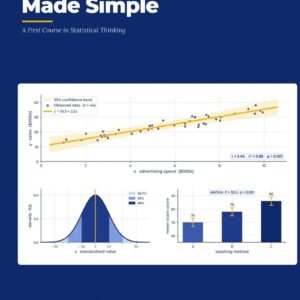
Statistics Made Simple Textbook — A First Course in Statistical Thinking for AP, A-Level, IB and Undergraduate
$ 12 -
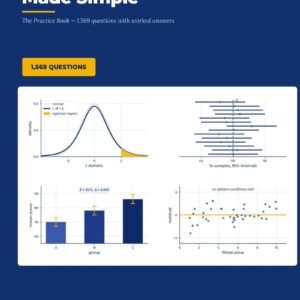
Statistics Made Simple Practice Questions — 1,569 Questions with Fully Worked Answers
$ 9 -
Sale!
Statistics Made Simple Complete Bundle — Textbook + 1,569 Practice Questions
Original price was: $ 21.$ 16Current price is: $ 16.
Check Our Academic Content
Measuring Living Standards by GNI
By Valeria Popa: Let us first distinguish between GNI, GDP and GNP to understand how is GNI different from these two measuring indicators. Study smarterGNI, PPP adjustment and the whole family of living-standards indicators are covered with worked comparisons in the...
Consumer Price Index and its Influence on the long-term interest rate
Valeria Popa In previous articles you have learned about macroeconomic indicator like GDP which is highly important for understanding business cycles and economic performances and GNI which can offer a perspective on the living standards of a country’s residents. We...
The Prisoner’s Dilemma Explained: The Classic Game Theory Problem
Game Theory · Classic ProblemsThe Prisoner's DilemmaWhy two perfectly rational individuals can end up worse off by acting in their own self-interest — the most famous problem in all of game theory.Imagine you and a friend are arrested for a crime. The police separate...
What is Variance in Statistics? Formula, Examples and Interpretation
If the difference between squared deviations and standard deviation still feels abstract, the fix is worked repetition. The Statistics Made Simple Practice Questions workbook has a full section of variance and standard deviation drills with worked answers. Statistics...
The Phillips Curve: Inflation, Unemployment, and the Expectations Trap
The Phillips curve showed a simple inflation-unemployment trade-off — until the 1970s destroyed it. A beginner-friendly guide to the original curve, expectations, the NAIRU, stagflation, and the post-COVID inflation debate. With worked calculations and exam-style practice questions.
No Results Found
The page you requested could not be found. Try refining your search, or use the navigation above to locate the post.
Recommendations
Economics Made Simple — The Complete Bundle
The Complete Bundle brings together everything we have built for AP and Cambridge A-Level Economics students: the full 914-page supplementary textbook, a 450-question practice workbook with mark schemes, a rapid-revision flashcard deck, and 100 real-world case studies with expert analysis. Four products, one price — designed to take you from first principles to exam-ready.
Most students use the textbook to understand the theory, the practice questions to test themselves under timed conditions, and the flashcards in the final week before the exam. The case studies sit alongside both — every concept grounded in something that actually happened, from carbon pricing in Sweden to the 2008 financial crisis. It is the study system we wish we had when we were students.

Be Apart of the Academic Community
Join the community of learner and receive free chapters, case studies and supplementary materials to ace in your exams.